
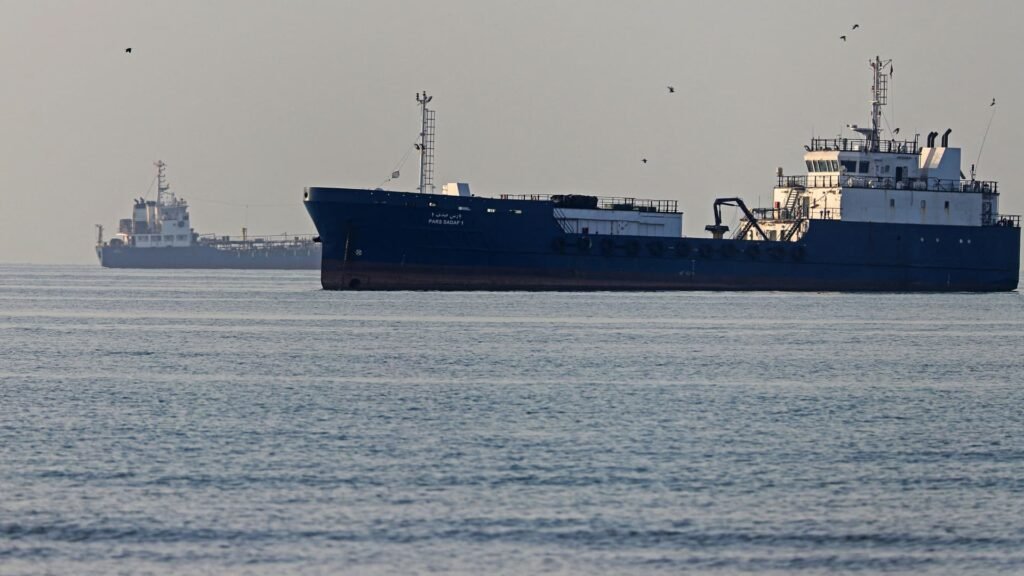

At least 20 oil tankers have crossed the Strait of Hormuz since the United States and Iran began reopening the sea route to commercial shipping, according to trade intelligence agency Kpler.
Tanker transits on Thursday reached their highest level since June 2, the company said. However, traffic is still below prewar levels, when more than 100 ships, including dozens of tankers, passed through Hormuz every day.
According to Kpler, a total of 25 ships passed through Hormuz on Thursday, including cargo, container and other classes of ships, in addition to tankers. Traffic has increased according to the US Navy ended his blockade of Iran, while Tehran allows ships to cross Hormuz for 60 days without paying tolls.
US Vice President JD Vance told reporters on Thursday that the Iranians were so far “fulfilling their part of the commitment.”
“Traffic was broadly balanced, with 13 intersections from west to east and 12 from east to west,” said Matt Smith, Kpler’s commodity research director.
Three Supertanker from Saudi Arabia and one from the United Arab Emirates crossed Hormuz on Thursday, according to Kpler. These huge ships, called Very Large Crude Carriers (VLCCs), can carry up to 2 million barrels of oil.
Iranian supertankers are turning on their transponders after wartime darkness falls, Kpler analysts told clients in a note Friday. Five Iranian supertankers loaded with oil were seen leaving the region on Friday, analysts said.
“Ship flows in both directions suggest that Iran’s crude oil trade is gradually returning to normal operating patterns,” the analysts said.
According to Kpler, eighteen ships that sailed via Hormuz on Thursday followed the route set by Iran. Only one ship used the route set by the International Maritime Organization. The routes of the six ships could not be confirmed, Kpler said.
The US-Iran deal has raised questions about how Hormuz will be governed. After the 60-day toll-free period expires, Iran will hold talks with Oman and Gulf states on managing the strait, it said Terms of contract. This seems to leave open the possibility that tolls could be imposed in the future.