

If the Strait of Hormuz will reopen after the signing the Iran peace agreement On Friday, experts say it will take some time to replenish the world’s strategic assets oil Supplies.

The longer it takes to rebuild these reserves, the greater the risk of an oil shortage if another geopolitical shock requires additional oil to be brought onto the market.
“Oil market fundamentals haven’t changed all that much whether this deal was signed yesterday or in two weeks. The oil market is (currently) undersupplied,” said economist Marc Ercolao of TD Economics.
“It’s going to take a long time to get this back.”
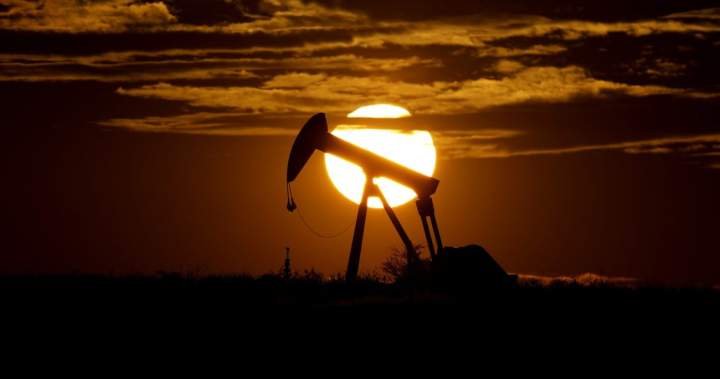
Strategically stored oil is referred to by industries and markets as Strategic Petroleum Reserves (SPR), and many countries maintain a certain amount of oil in these storage facilities in case of unexpected supply shortages.
“(SPRs) are meant to help to meet global demand at a time when current or normal sources of supply are no longer working as well. So that means there is demand and demand usually leads to higher prices,” says Ercolao.
Related videos

The International Energy Agency (IEA) requires its 32 member countries to maintain a minimum emergency oil reserve equal to 90 days of net imports of crude oil and petroleum products.
Although Canada is a member of the IEA, it is also the only G7 country that does not have a government-mandated strategic stockpile. This is primarily because the country is a net exporter of crude oil.

Get breaking national news
Get breaking Canadian news delivered straight to your inbox so you never miss a trending story.
Regardless of the exemption Conservative leader Pierre Poilievre called on Ottawa to create a strategic reserve as additional insurance after the Iran war. At the time he said: “Our supplies are at zero.”
Although China has the largest strategic reserves in the world, it is not a full member of the IEA, meaning that the US has the largest strategic reserves of any IEA member country.
And US strategic reserves are reportedly running low.
“For the last four months, to make ends meet, we’ve been drawing on the reserves we normally keep for emergencies. And that’s exactly what they’re there for. But the thing is, those reserves are slowly running out,” says Concordia University economics professor Moshe Lander.
“We’re not really at a point where we’re running out of oil, but it’s dangerously close.”
Earlier this week, the US Department of Energy announced that crude oil inventories in the US strategic petroleum reserves fell to 340.3 million barrels, the lowest level since 1983.
According to the US Energy Information Administration, that is less than half of the capacity of just over 700 million barrels.
Part of the decline is due to the United States agreeing in March to contribute about 170 million barrels of crude oil from its strategic reserves the release of 400 million barrels coordinated by the IEA together with other member countries to help calm oil markets.
If the Strait of Hormuz reopens, there will likely be a flood of oil onto global markets, meaning the U.S. may be able to reduce or eliminate its strategic reserves to make up for the shortage caused by the closure of the Strait for several months.
But it will take a few more months to catch up. This is because cargo ships move very slowly and facilities and infrastructure damaged during the conflict need to be repaired.
Until oil markets normalize, demand is likely to remain high, which could mean relying even more heavily on strategic reserves.

Higher demand for oil typically causes prices to rise, meaning both consumers and businesses will have to pay higher prices for fuel and other products for some time.
“If we look at global strategic reserves, they have declined significantly, but we would not say that they have already reached alarming levels. But if we focus on the United States, which is the largest member of this strategic reserve release program, they have only recently reduced their reserves to levels not seen since 1983,” Ercolao says.
“At some point, these barrels will need to be refilled, so the price relief we’re seeing now could become even stronger. Once the U.S. or another country is back on the market, they can increase the number of barrels they have in their strategic reserves.”
Ercolao said U.S. reserves are on track to reach more critical levels by next month, and this comes at a time of peak demand during the summer travel season, meaning more fuel is expected to be used by automobiles and aviation.
Markets like the US may be able to sustain oil demand as their strategic reserves are depleted by producing and importing more when needed. But not having enough strategic reserves poses additional risk if another geopolitical shock occurs or if the fragile US-Iran peace deal fails.
“The US accounts for 40 to 50 percent of the entire (SPR) program. Relative to history and relative to where they should keep the level, it is at its lowest point or at one of its lowest points,” Ercolao says.
“The problem with that is that it leaves less buffer and less room to respond to future shocks.”
&Copy 2026 Global News, a division of Corus Entertainment Inc.