
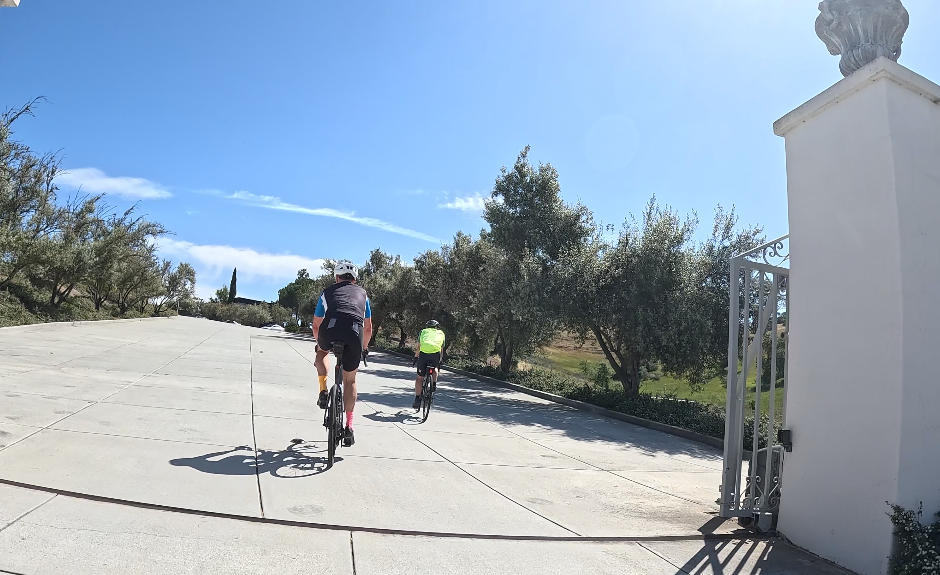

I had pushed myself a bit on the group ride last Tuesday, so I did a shorter recovery ride on Wednesday, which felt great. On Thursday I did a strenuous stand-up ride with standing intervals, which went well, and then did some upper body strength training. Friday and Saturday were fun rides on my recumbent bike. Sunday was a fun, long ride with my upright. The local Willow Heights Mansion, which hosts weddings and other celebrations, opened its doors to our club on Sunday. This was also the day of our club picnic to thank the volunteers for our Tierra Bella event. The picnic took place at Mohi Winery. From my house a cruise to Willow Heights, Chesbro and Uvas reservoirs to get to Mohi for picnic followed by drive home which was a nice route. The picnic was nice as I usually only ride in the southern end of our county, so this was a chance to meet people from further north.
I felt great after the ride, but had sore legs later in the day, so I think I’ll stick with shorter upright rides and longer corner rides.


The rest are pictures of the stunning surroundings around the mansion:


Share this:

Related

Published by
I am a mechanical engineer, born in 1953, Ph.D., Stanford, 1980. I have been working in the mechanical CAE field for decades. I also have a lifelong interest in outdoor activities and fitness. Due to a genetic condition, I had both hips and a heart valve replaced. This blog chronicles my adventures in staying active despite these bumps in the road.
View all posts by BionicOldGuy
Published