
Anthony ZuercherNorth America correspondent
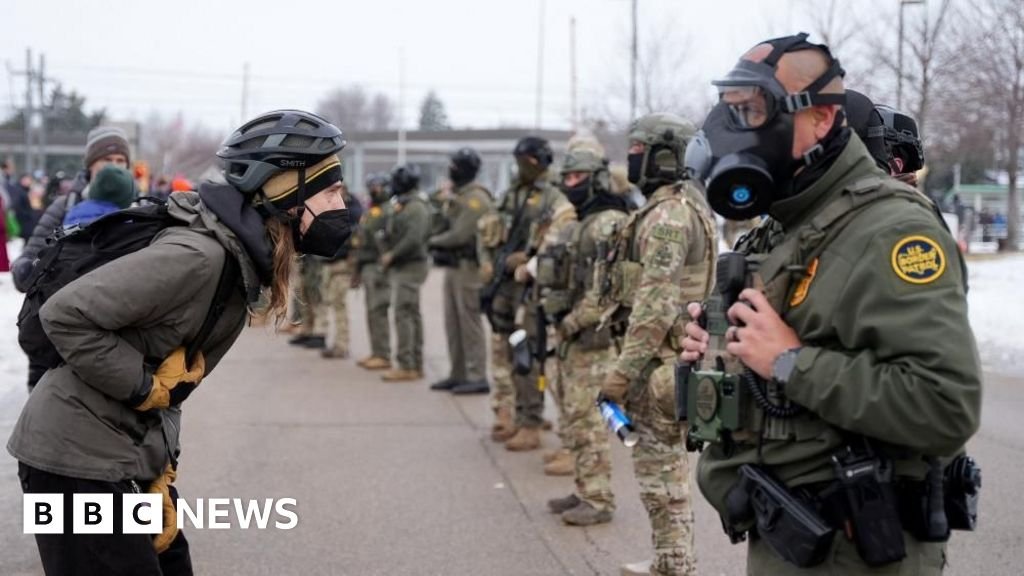
The fatal shooting of a woman in Minneapolis by a federal police officer highlights the sharp divisions in US politics – and threatens to inflame an already contentious debate over immigration policy.
The incident occurred in broad daylight. There are several videos recorded by bystanders in various locations. And yet even the basic facts are disputed.
Almost immediately after the shooting, two completely different accounts began to take shape. Any ambiguities in the videos shared online were addressed – different angles and different screenshots were used to push a particular narrative.
And on the public stage, state and federal officials openly disagreed.
According to Homeland Security Secretary Kristi Noem, the driver – 37-year-old Renee Good – was at fault. As she drove away from ICE officers, Noem said, she used her car as a weapon in a “domestic terrorist attack.”
US President Donald Trump accused a “professional agitator” and a “radical left-wing movement of violence and hate” in a Truth Social post.
National Democrats — as well as state and local officials in Minnesota — have painted a very different picture.
Jacob Frey, the Democratic mayor of Minneapolis, said a federal agent “recklessly” used deadly force. He also issued a profanity-laced order for immigration officials to leave the city.
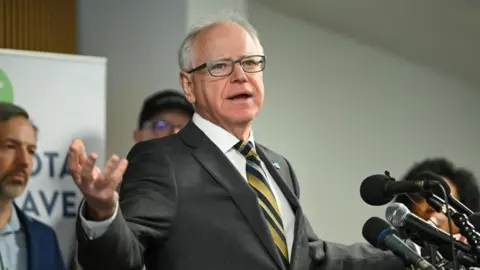
Minnesota Gov. Tim Walz called the shooting “completely predictable” and “entirely avoidable,” arguing it was a direct result of the surge in federal immigration agents in Minneapolis and surrounding areas in recent days.
“We have been warning for weeks that the Trump administration’s dangerous, high-profile operations pose a threat to our public safety,” he said Wednesday.

 Getty Images
This clear divide between the federal government and local authorities became even clearer Thursday morning when the Minnesota Bureau of Criminal Apprehension announced that the Justice Department and FBI would no longer cooperate in the investigation of the shooting.
It said federal authorities were solely responsible for investigating the ICE agent’s use of deadly force.
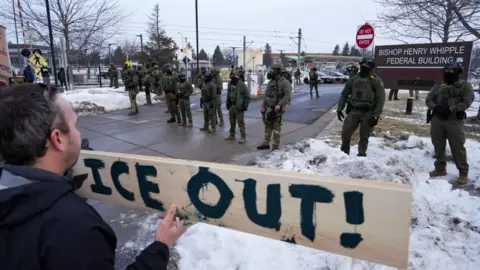
That Minnesota has become the epicenter of a growing conflict over immigration enforcement in recent months is not surprising — and ironic.
It’s ironic because Good’s death occurred just miles from where Minneapolis police killed George Floyd during an arrest attempt in 2020, sparking nationwide Black Lives Matters protests — including some that turned violent in Minneapolis.
Walz has put the state’s National Guard on standby and warned the hundreds of protesters who have taken to the streets not to use force.
Minnesota’s central role in this latest flare-up is not surprising, as it marks the culmination of conflicts, controversies and scandals that had been building for months.
The latest surge in immigration enforcement comes after Trump mocked the state’s large Somali immigrant population – most of whom are U.S. citizens – after members of the community were convicted of widespread fraud in the distribution of federal Covid aid.
“Hundreds of thousands of Somalis are robbing our land and destroying this once great state,” he said in November. “We will not tolerate such attacks on law and order by people who should not even be in our country.”
Under pressure, Walz gave up his bid for re-election last week as allegations of corruption mounted in state social services, including child care and food aid.
 EPA
EPAThe surge in federal immigration enforcement is just the latest example of the Trump administration using federal agents to target communities suspected of having high populations of illegal migrants. The use of force in this operation is also not an isolated case.
According to the New York Times, the incident in Minnesota was at least the ninth immigration-related shooting since September, each involving people being attacked in their vehicles.
The intensity with which immigration enforcement has been implemented – in a growing number of cities across the US – has led to protests and calls from Democratic officials for more oversight, accountability and restraint among law enforcement officers.
The deadly shooting in Minneapolis has already given these efforts new urgency among advocates.
Trump administration officials, for their part, are pushing further — citing the mandate they say they received from voters in the 2024 presidential election and evidence that their efforts have proven effective, namely by dramatically reducing undocumented entries into the United States.
They have also vigorously disputed the argument that the video of the Minneapolis shooting was evidence of abuse of deadly force.
“The gaslighting is off the charts and I’m having none of it,” Vice President JD Vance wrote in a post on X. “This guy was doing his job. She tried to stop him from doing his job.”
While he said the incident was tragic, he added that “this woman and all the radicals who teach people that immigration is the only kind of law that rioters are allowed to interfere with are to blame.”
In his next public comments, Walz quickly countered.
“People in positions of power have already made judgments, from the president to the vice president to Kristi Noem, telling you things that are demonstrably false and demonstrably inaccurate,” he said. “They determined the character of a 37-year-old mother who they didn’t even know.”
It appears that even video evidence leaves room for interpretation at this point. Each person sees the same images and draws significantly different conclusions – which often, perhaps unsurprisingly, reinforce their previously established positions.
The divide in US politics appears to be as unbridgeable as it is frightening.

Follow the twists and turns of Trump’s second term with North America correspondent Anthony Zurcher’s weekly US politics unspun newsletter. Readers in the UK can Register here. People outside the UK can do this Register here.